

Living Labs
Cyber Lab
Our laboratory explores the convergence of three strategic domains: artificial intelligence, quantum algorithms, and cybersecurity. Rather than treating them as isolated disciplines, we focus on their fusion and on the capabilities, risks and questions emerging at their intersection. We develop methods for malware analysis, intelligent penetration testing, autonomous cyber defence, and agentic AI systems supporting detection, reasoning, and response. Our research also investigates the structure, behaviour, and properties of modern cyber weapons and AI-enabled malware, including adaptive, evasive, and semi-autonomous threats. By combining machine learning, quantum and quantum-inspired computation, behavioural analysis, complex systems, and offensive-security methods, we aim to create next-generation tools for understanding, simulating, detecting, and countering advanced attacks. The laboratory connects core research with experimental validation and real-world cybersecurity applications.
Industry
Services & Equipment
The Cyber Lab team offers industrial and institutional partners applied cybersecurity and AI expertise—from malware analysis and AI-enhanced penetration testing to security assessment of agentic systems, cyber-defence prototyping, and quantum-inspired security research—backed by access to high-performance and quantum computing infrastructure at IT4Innovations.
All research, testing, and validation activities are designed and carried out in accordance with applicable EU regulatory requirements and cybersecurity frameworks, including the EU AI Act, where relevant. Particular attention is paid to security, transparency, traceability, risk management, and responsible use of AI technologies.
We closely cooperate with the Electrotechnical Testing Institute (EZÚ Prague), combining academic research and advanced cybersecurity expertise with practical experience in testing, conformity assessment, certification, and regulatory compliance. This cooperation supports the development of methodologies and laboratory processes aligned with European requirements for trustworthy and secure digital technologies.
Our cooperation includes:
Advanced malware analysis
We provide advanced static, dynamic, and behavioural analysis of malicious software. Our services include malware classification, identification of malware families, analysis of API calls, system activity, network communication, persistence mechanisms, and evasion techniques. We also investigate polymorphic, obfuscated, and AI-enabled malware whose behaviour may change dynamically during execution.
AI-based cyber defence prototyping
We design and validate experimental AI systems for threat detection, incident analysis, alert prioritisation, and defensive decision support. These solutions may use machine learning, LLM agents, behavioural analytics, and multi-agent architectures to support SOC teams and security analysts. The result is typically a proof of concept, demonstrator, or prototype tailored to a specific defensive scenario.
AI-enhanced penetration testing
We combine conventional penetration-testing methodologies with artificial intelligence and automated reasoning. AI-supported tools can help identify attack paths, prioritise vulnerabilities, analyse complex findings, and adapt testing strategies to the target environment. The service can include targeted security assessments, red-team scenarios, and experimental agent-based penetration testing.
Cybersecurity research, training and technology consulting
We provide expert studies, feasibility analyses, technology assessments, specialised training, and research support in AI, cybersecurity, and quantum computing. Activities can be tailored to technical teams, management, public authorities, or research organisations. The service may also include the design of research roadmaps, datasets, experimental methodologies, and collaborative R&D projects.
LLM vulnerability research and analysis
We assess large language models and LLM-based applications for security weaknesses, misuse scenarios, and adversarial behaviour. Our work includes prompt-injection and jailbreak testing, data-leakage analysis, insecure tool use, agentic workflow vulnerabilities, and robustness against malicious or manipulated inputs. The service can include red-team evaluation, controlled adversarial testing, and research into new attack vectors and mitigation strategies for deployed LLM systems.
Quantum and quantum-inspired cybersecurity solutions
We assess whether selected cybersecurity problems can benefit from quantum or quantum-inspired computation. Services may include the design of hybrid quantum-classical workflows, optimisation models, quantum classifiers, and benchmarking against conventional methods. The emphasis is placed on technically realistic use cases and measurable benefits rather than purely theoretical demonstrations.
Security assessment of AI and agentic systems
We evaluate the security, robustness, and misuse resistance of AI applications, large language models, RAG systems, and autonomous agents. Testing may include prompt injection, jailbreaks, data leakage, adversarial inputs, poisoned knowledge sources, unsafe tool use, and excessive agent permissions. The objective is to identify technical weaknesses before they can be exploited in real-world operation.
Equipment & facilities
Karolina supercomputer (IT4Innovations)
Infrastructure includes hundreds of CPU nodes, an accelerated partition with 576 NVIDIA A100 GPUs, high-memory nodes with up to 24 TB of shared RAM, high-speed InfiniBand interconnection, and petabyte-scale storage. Supports distributed machine learning, deep learning, graph analytics, large-scale behavioural analysis, and hybrid HPC–AI workflows.
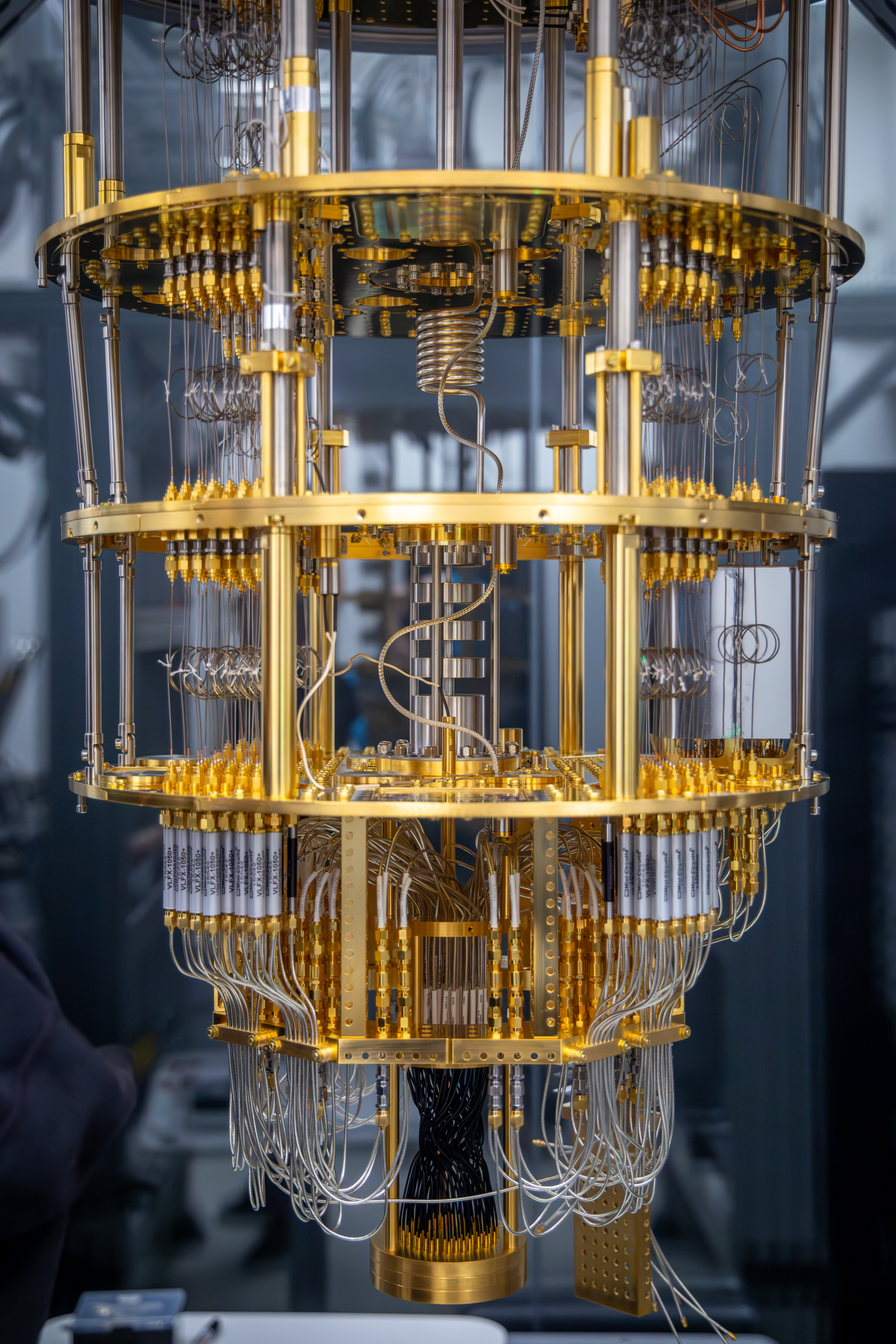
VLQ quantum computer (IT4Innovations / EuroHPC)
The architecture is designed to reduce SWAP operations and improve utilisation of limited coherence time. The system supports Qiskit and Cirq and enables experimental validation of quantum and quantum-inspired classifiers, optimisation algorithms, and hybrid cybersecurity workflows.

TOP Publications