
Living Labs
Mobility Lab
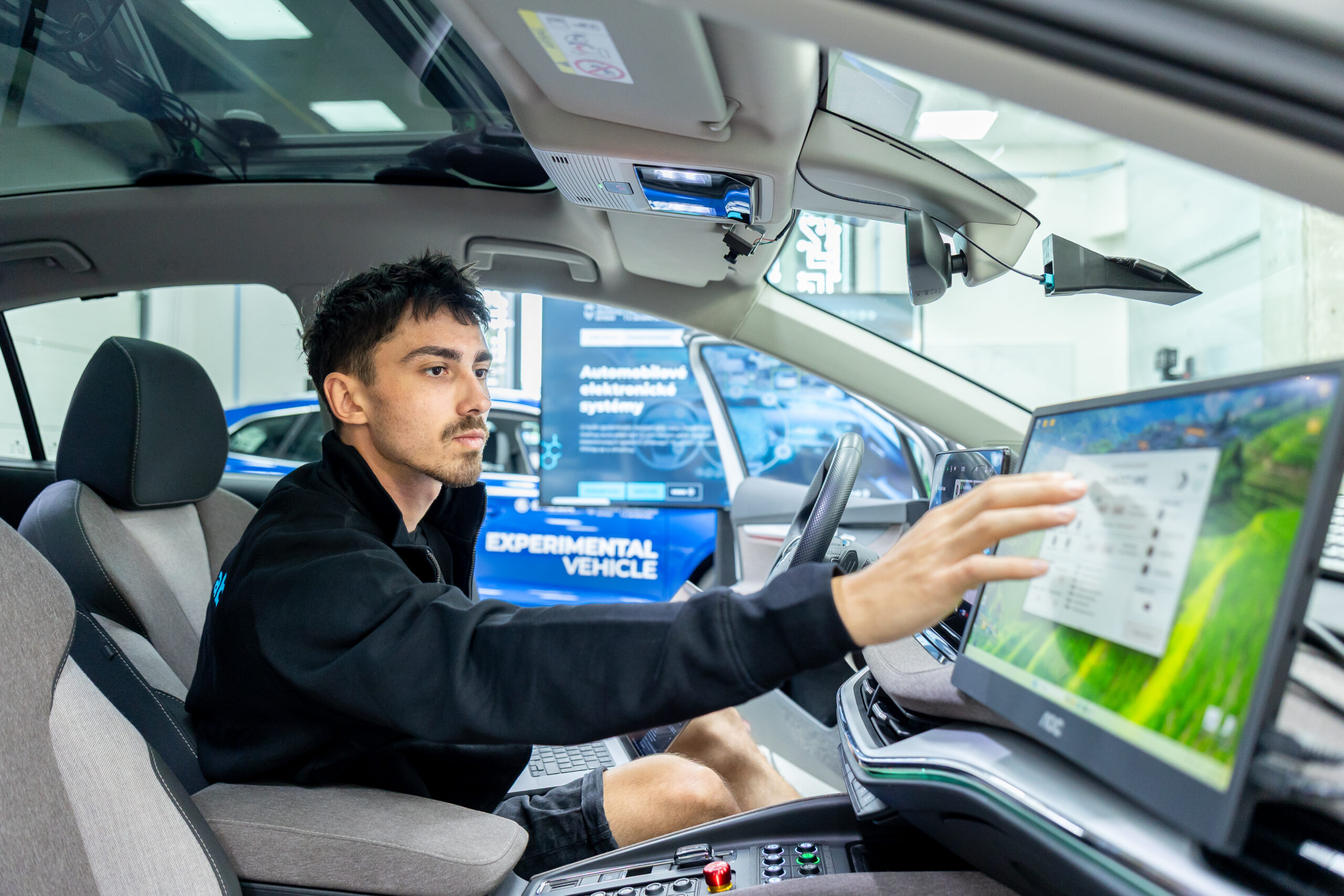
Testbed with special equipment for (“HPS”, HIL-PIL-SIL) modeling, simulation and testing of electronic systems in component or integration assembly, is mainly focused on advanced assistance systems and systems for autonomous driving of cars and industrial vehicles.
Industry
Services & Equipment
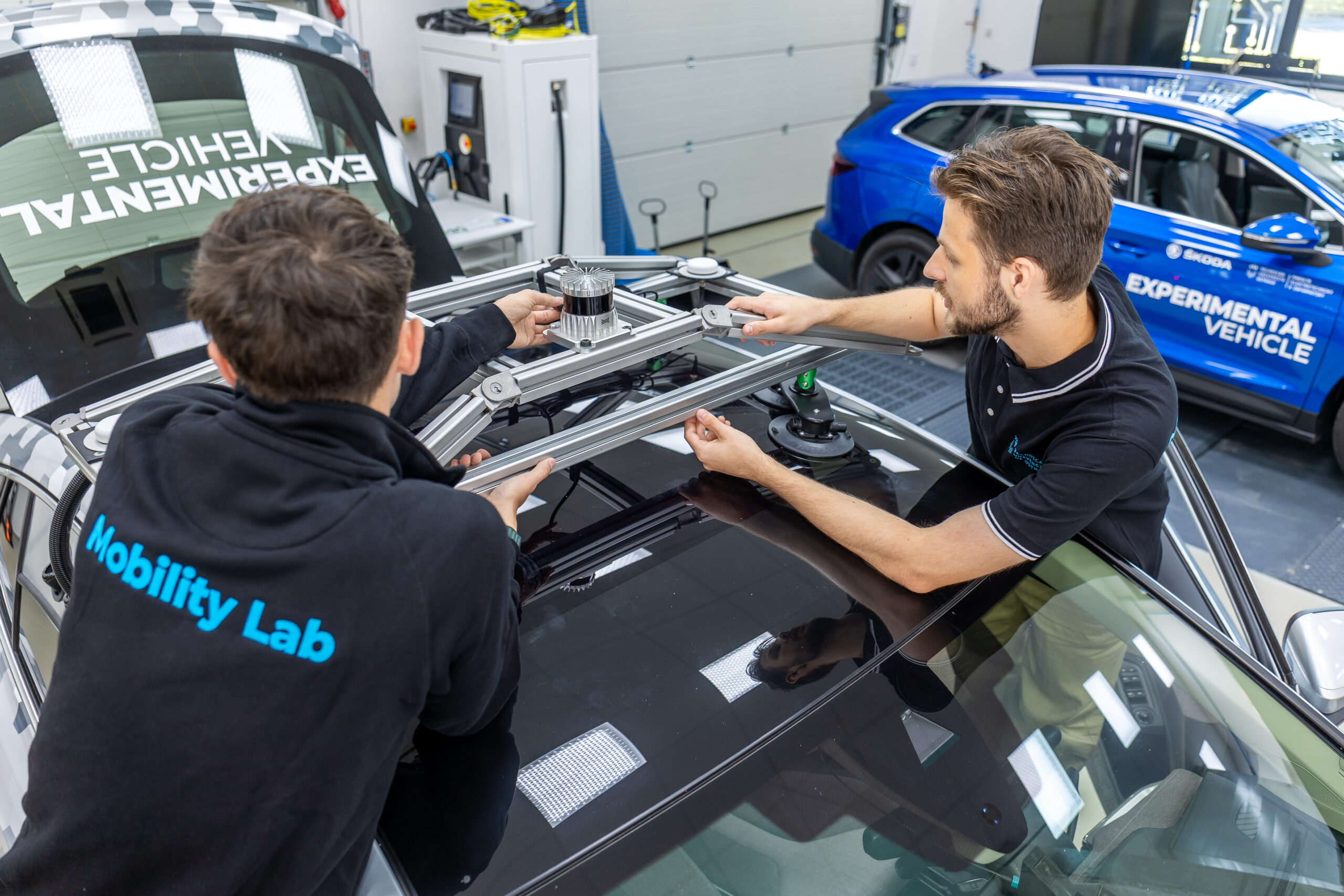
The lab supports advanced automotive testing, validation, and development, including functional safety and Automotive SPICE processes. Its infrastructure enables high-speed vehicle testing, smart charging, and precise energy flow monitoring for conventional, hybrid, and electric vehicles.
Our cooperation includes:
Energy flow monitoring and control
Monitoring and control of energy flows of each appliance with significant electricity consumption — HIL systems, active dynamic test room, controlled ventilation, hydraulic systems, and other technologies.
EV and plug-in hybrid charging infrastructure
2× outdoor charging stations (2× 150 kW), 1× indoor charging station (1× 80 kW) for hybrid or electric drive.
Functional safety and Automotive SPICE
Functional safety and standardization of development processes in the automotive industry (Automotive SPICE).
Vehicle driving tests up to 330 km/h
Air flow 150 km/h with volume of 50 000 m³/hour.
Equipment & facilities
Energy flow monitoring platform
Covers HIL systems, active dynamic test room, controlled ventilation, hydraulic systems, and related infrastructure.
EV charging stations
Configuration includes 2 outdoor chargers rated at 150 kW each and 1 indoor charger rated at 80 kW, with controllable energy flows up to supercharging mode.
High-speed vehicle test facility
Includes controlled airflow up to 150 km/h with a volume of 50 000 m3 per hour for repeatable high-load testing scenarios.
HIL / PIL / SIL testbed
Supports component and integration-level validation workflows for automotive and industrial vehicle systems.

Publications