
Living Labs
Modelling Lab
Modelling Lab at the Department of Applied Mathematics helps companies develop products and processes through mathematical modelling, simulation and optimization. We tackle demanding engineering problems, accelerate calculations and reduce reliance on costly physical experiments.
Our expertise connects high-performance computing with mechanics, acoustics, electromagnetism, data analysis, molecular modelling and robotics. We develop the open-source PERMON library and EasyBEM and turn research methods into tools for industrial applications.
Research and collaboration
We work closely with the Institute of Geonics (IGN) on research and student education. Prof. Ulrich Rüde joined through REFRESH after working at FAU Erlangen-Nürnberg and CERFACS, strengthening our expertise in large-scale parallel simulations of flows and granular systems. Students and doctoral candidates can join through final theses and joint research.
Our research partners
Our long-term research partners include MIT, Stanford University, the University of Colorado, JKU Linz, the University of Graz, CSC Helsinki, FAU Erlangen-Nürnberg, KAUST, Université de Toulouse, CTU Prague and the Technical University of Liberec. These partnerships connect advances in computational methods with practical applications.
Industry
Services & Equipment
We offer tailored algorithms, high-resolution simulations and integration of our computational libraries into existing systems. Explore the areas below for research cooperation, software development and specialist training, including problems beyond the capabilities of standard commercial tools.
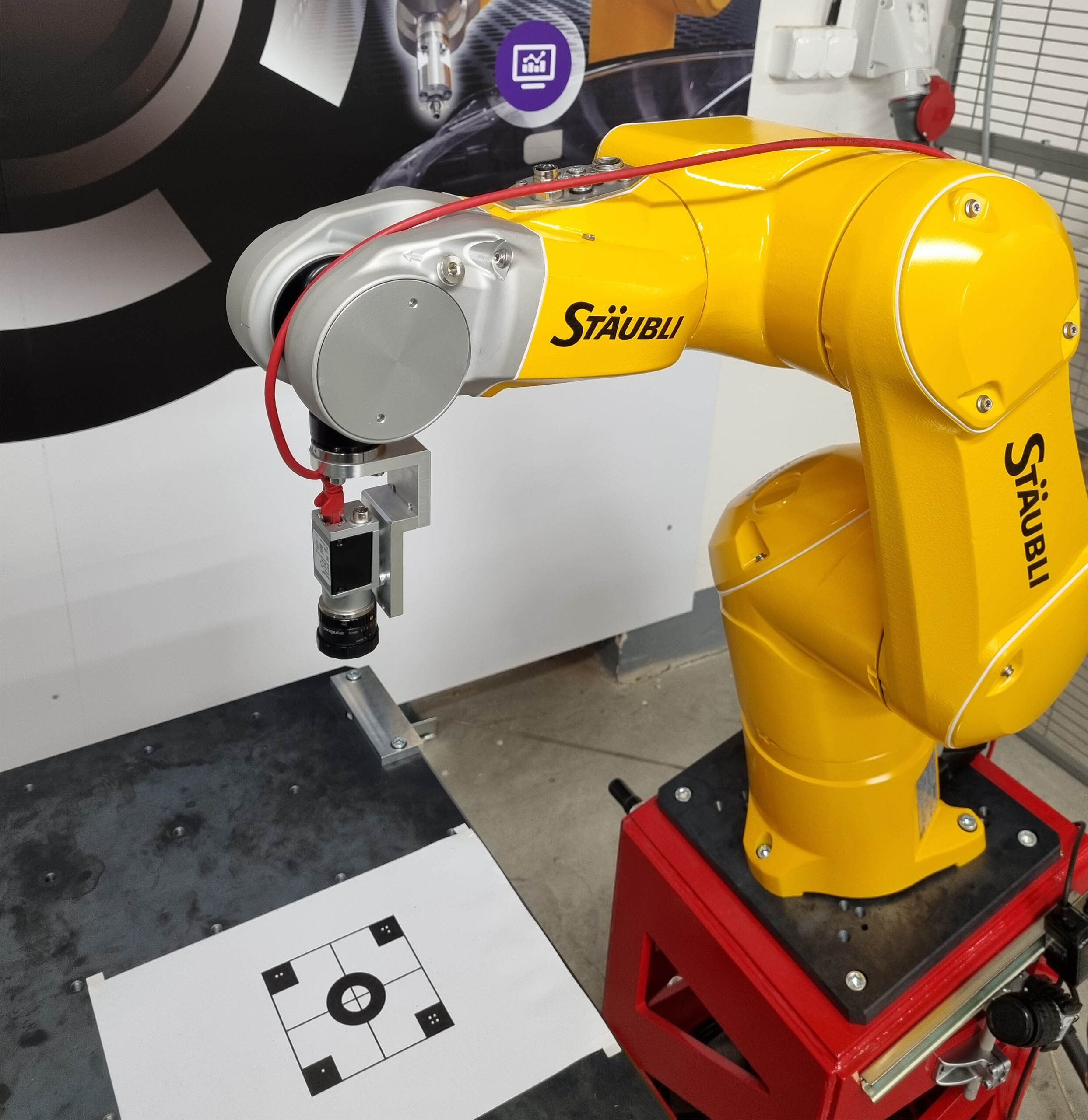
Our cooperation includes:
Acoustic, electromagnetic and heat-transfer modelling
Our EasyBEM library implements numerical methods for acoustics, electromagnetism and heat transfer, including problems in unbounded domains. We develop boundary element methods (BEM) and a novel operator preconditioner suitable for GPUs.
The lab reports performance beyond other available BEM software with this approach.
Advanced molecular modelling and simulation training
We provide advanced training in molecular modelling and simulation, including quantum approaches. Our research covers the electronic structure and dynamics of molecular complexes, with applications including low-temperature plasma physics.
Discrete optimization for load balancing and planning
Application of discrete optimization techniques to load balancing, scheduling and planning, including graph-based approaches to parallelization of computations.
Inverse modelling and uncertainty analysis
Our research addresses geotechnical inverse problems and uncertainty modelling using Bayesian methods and physics-informed neural networks. These are areas for research cooperation with partners facing complex modelling problems.
Modelling and optimal scheduling
Mathematical modelling and optimal scheduling, drawing on expertise in graph structures, optimization and parallel computation.
Nonsmooth optimization methods and software
We develop smooth and nonsmooth optimization methods and software for shape optimization, flow and contact problems, and robotics, including a nonsmooth optimization library.
Our optimal control methods and software support real-time collaborative robotics, including robotic arms, Bennett mechanisms, humanoids and drones.
Quadratic programming and FETI algorithm development
We develop quadratic programming (QP) solvers and FETI domain decomposition methods, including massively parallel implementations for demanding engineering problems such as contact mechanics.
Developed with the Institute of Geonics, the open-source PERMON library extends PETSc with QP solvers, FETI methods and support vector machine (SVM) implementations. It has attracted interest from teams at Argonne and Oak Ridge National Laboratories and has been used for automated forest-fire detection from NASA satellite imagery.
Statistical modelling and data integration
We combine heterogeneous datasets from different sources, often incorporating specific expert information.
Applications include extracting information from DNA microarray chip images, reconstructing three-dimensional blood-vessel models from CT scans, and estimating or predicting the states of dynamic systems, such as the position of a robot from sensor data.
Projects
Algorithm Development for Complex Industrial Problems
Computational Stochastic Rupture Risk Assessment of Abdominal Aortic Aneurysm
Computationally Demanding Computer Simulations and Optimization
Efficient Lifetime Estimation Methods for General Multiaxial Loading
Publications